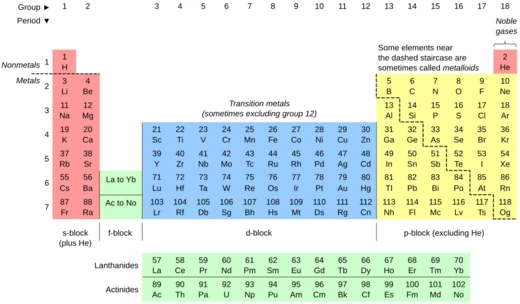
Group 3 element
First transition metal group, disputed composition, key to rare-earth chemistry.

Sandbh · CC BY-SA 4.0
Group 3 is the first group of transition metals in the periodic table, closely related to the rare-earth elements. It contains scandium (Sc), yttrium (Y), lutetium (Lu), and lawrencium (Lr), and is also called the scandium group or scandium family. The group's composition has been historically disputed, with some sources including lanthanum (La) and actinium (Ac) instead of lutetium and lawrencium, but chemical and physical evidence supports the Sc-Y-Lu-Lr classification.
- elements
- Scandium, yttrium, lutetium, lawrencium
- oxidation_state
- +3 (major)
- physical_properties
- Soft, silvery-white metals; hardness increases with atomic number
- reactivity
- Tarnish in air, react with water, masked by oxide layer
- occurrence
- Sc, Y, Lu occur naturally; Lr is synthetic and radioactive
- biological_role
- None
Lore & Background
Group 3 elements are typical early transition metals: electropositive, with a +3 oxidation state and less rich coordination chemistry. Yttrium and lutetium are very similar due to the lanthanide contraction, while scandium differs due to its small size. The first three occur naturally, often associated with lanthanides; lawrencium is strongly radioactive and must be artificially synthesized.
Reader's Guide
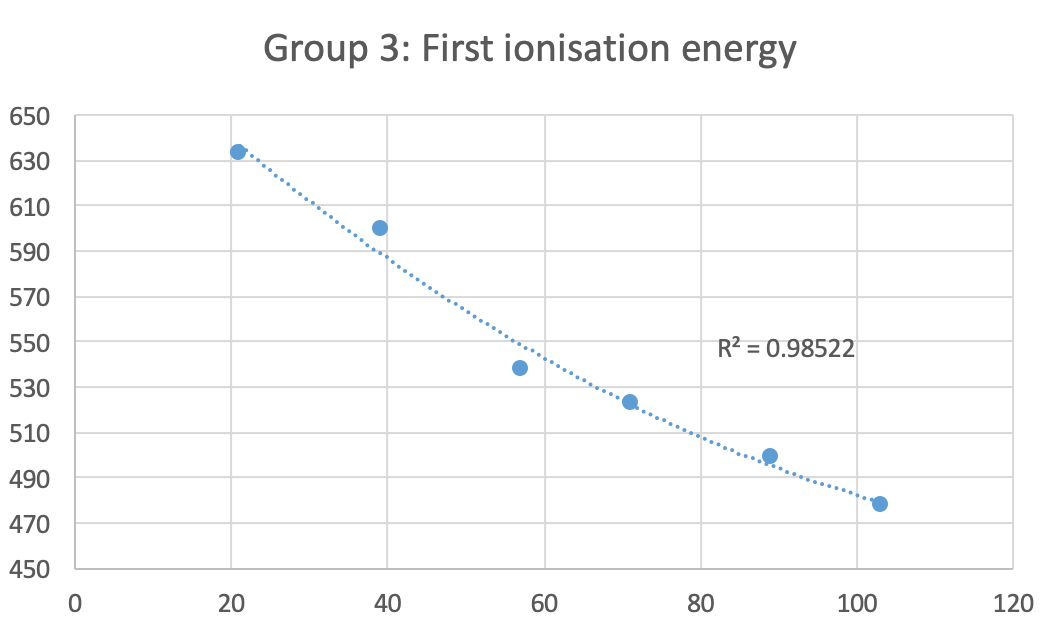
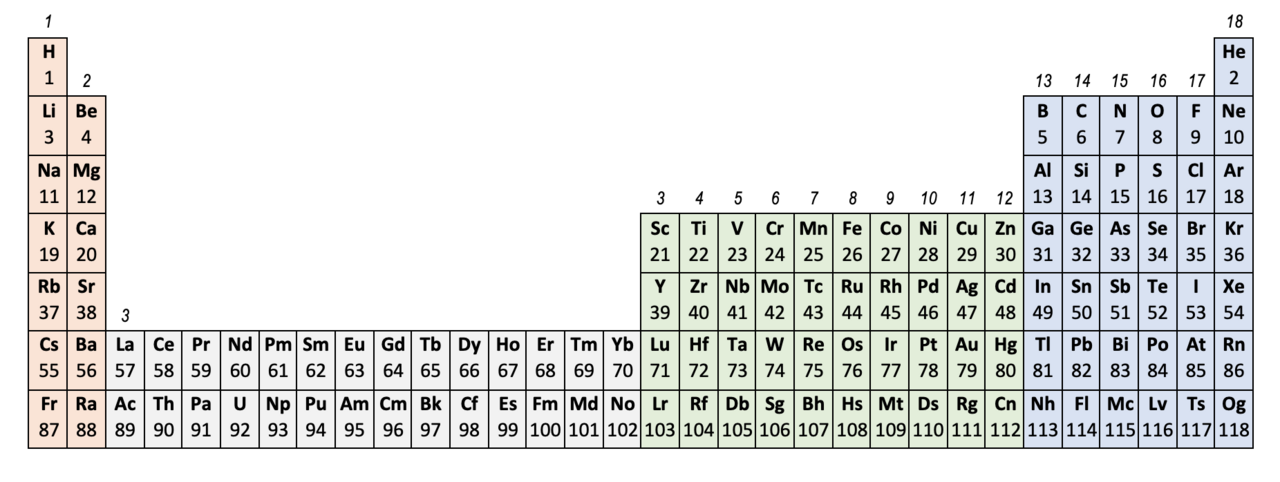
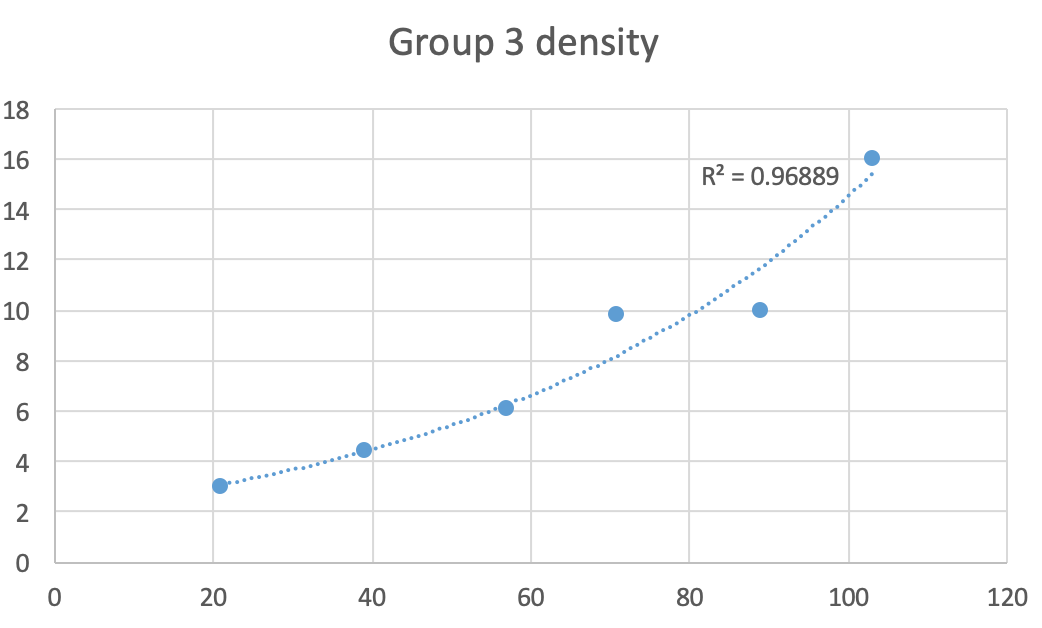
The composition of group 3 has been debated since the early 20th century. Historically, lanthanum and actinium were included due to wrongly measured electron configurations, a format still found in many textbooks. However, chemical and physical evidence—such as crystal structures, oxide and chloride structures, and superconductivity—supports lutetium and lawrencium as the correct heavier homologues. The alternative format leaving spaces below yttrium contradicts quantum mechanics by creating a 15-element-wide f-block. The Sc-Y-Lu-Lr form preserves atomic number sequence, avoids splitting the d-block, and gives blocks correct widths (2, 6, 10, 14). Lanthanum and actinium have valence f-orbitals that can become occupied chemically, whereas lutetium and lawrencium have f-shells in the core, making the relationship between yttrium and lutetium primary.
Did You Know?
- Group 3 is also called the scandium group after its lightest member.
- Yttrium and lutetium have essentially the chemistry of the heavy lanthanides.
- Lawrencium does not occur naturally and must be produced by artificial synthesis.
- The group 3 elements have no biological role.
The Modern Numbering Framework
The current standard for organizing the periodic table into vertical families was formalized by IUPAC in 1988 and has since become the universally accepted convention. Under this scheme, eighteen columns are assigned sequential numbers from one to eighteen, running left to right across the table. The underlying logic is electronic: each group number reflects the count of s, p, and d electrons that an atom possesses beyond the configuration of the preceding noble gas. Fourteen additional columns, housing the f-block inner transition metals, sit between groups two and three but remain deliberately unnumbered, bringing the total column count to thirty-two. This clean, linear progression was designed to eliminate the ambiguity that had plagued chemists for decades. While the community broadly embraces the eighteen-group framework, a small but persistent debate continues over whether hydrogen and helium truly belong in their assigned positions, and textbooks still show variation in how inner transition elements are placed, even though the correct arrangement has been established since 1948 and re-confirmed by IUPAC in both 1988 and 2021.
The A/B Suffix Confusion
Before the unified numbering took hold, two rival systems competed for dominance in different parts of the world. The Chemical Abstracts Service convention, widely used in the United States, and the older IUPAC scheme, favored in Europe, both relied on Arabic or Roman numerals paired with the letters A and B. Crucially, the numerals in both systems tracked roughly the highest oxidation state available to elements in that column, and the two agreed on which number went where. The fatal flaw lay in the letters. In the old IUPAC approach, A designated the left-hand portion of the table and B the right-hand portion. In the CAS approach, A marked the main-group elements and B the transition metals. The result was that a label like 'group IVB' could point to two entirely different columns depending on which convention a reader assumed.
Naming Beyond Numbers
Beyond their numeric labels, groups carry a rich tapestry of alternative names that can vary by discipline and tradition. Many are anchored to the topmost member of the column: group sixteen, for instance, is commonly called the oxygen group. Others draw on older chemical vocabulary, such as the chalcogens for group sixteen or the halogens for group seventeen. A set of Greek-derived trivial names also persists: triels for group thirteen (from tri, meaning three), tetrels for group fourteen (from tetra, four), and pentels for group fifteen (from penta, five). Perhaps the most notorious ambiguity is the phrase 'iron group.' In a strict periodic-table sense it refers to group eight, yet in general chemistry it often denotes the trio of iron, cobalt, and nickel, while astrophysicists and nuclear physicists extend the set to include chromium and manganese as well. Even the coinage metals of group eleven spark disagreement: roentgenium sits in the same column as silver, gold, and copper and is expected to share their chemistry, but its extreme radioactivity and fleeting half-life lead some authors to exclude it from the coinage label entirely.
The Chemical Logic and Boundary Cases
At its core, the grouping of elements into vertical families rests on a single electronic principle: atoms in the same column share the same number of outermost-shell electrons and the same effective nuclear charge acting on those electrons. Because nearly all chemical behavior is governed by the orbital position of that outermost electron, members of a group tend to display remarkably similar physical and chemical traits. Yet the concept of a 'group' is not limited to strict columns. Several well-known collections—noble metals, precious metals, refractory metals, and coinage metals—cut across the table and are nonetheless called groups in everyday chemical discourse. These non-columnwise sets are defined by shared practical or chemical properties rather than by a single electron count. The boundary of what qualifies as a true group versus a convenient label remains a point of discussion, particularly for the f-block elements whose placement between groups two and three has been a source of textbook inconsistency for decades, despite the correct arrangement being settled since the late 1940s.
Gallery

Frequently Asked Questions
Who is Group 3 element?
Group 3 is the first column of transition metals on the periodic table, comprising scandium, yttrium, lutetium, and lawrencium. Fans often call it the scandium group or scandium family because of its tight chemical kinship with the rare-earth elements.
What are Group 3 element's powers and role?
Every member locks into a dominant +3 oxidation state and presents as a soft, silvery-white metal whose hardness steadily increases down the column. They tarnish in air and will react with water, though a stubborn oxide film usually hides that reactivity from casual observation.
How does Group 3 element's story end?
Scandium, yttrium, and lutetium are pulled naturally from the Earth's crust, while lawrencium is entirely synthetic and radioactive, surviving only in lab quantities. None of the four play any confirmed biological role in living organisms.
Why is Group 3 element important to the wider table?
As the very first transition-metal group, it marks the entrance to the entire d-block and anchors the chemistry that defines the rare-earth elements. Its consistent +3 behavior makes it a cornerstone for materials science, superconductors, and specialty alloys.
Is there a dispute over who belongs in Group 3?
Yes—some older charts slot lanthanum and actinium into the group instead of lutetium and lawrencium. Modern chemical and physical evidence, however, firmly supports the scandium–yttrium–lutetium–lawrencium lineup, and that is the classification used in current IUPAC-aligned references.
More in Periodic Table & Elements 1-21
Spotted an error? Know more?
This is a living reference — every entry is fact-audited, and reader corrections feed straight into our audit queue. Suggest an edit · See this site's audit record