Group (periodic table)
A column of elements with similar chemical properties.

Sandbh · CC BY-SA 4.0
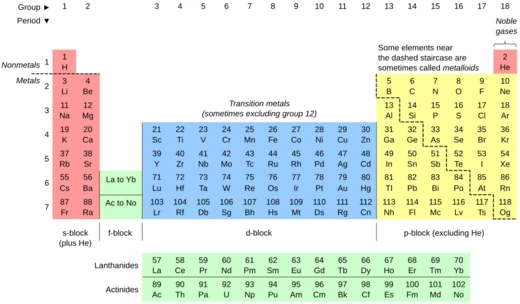
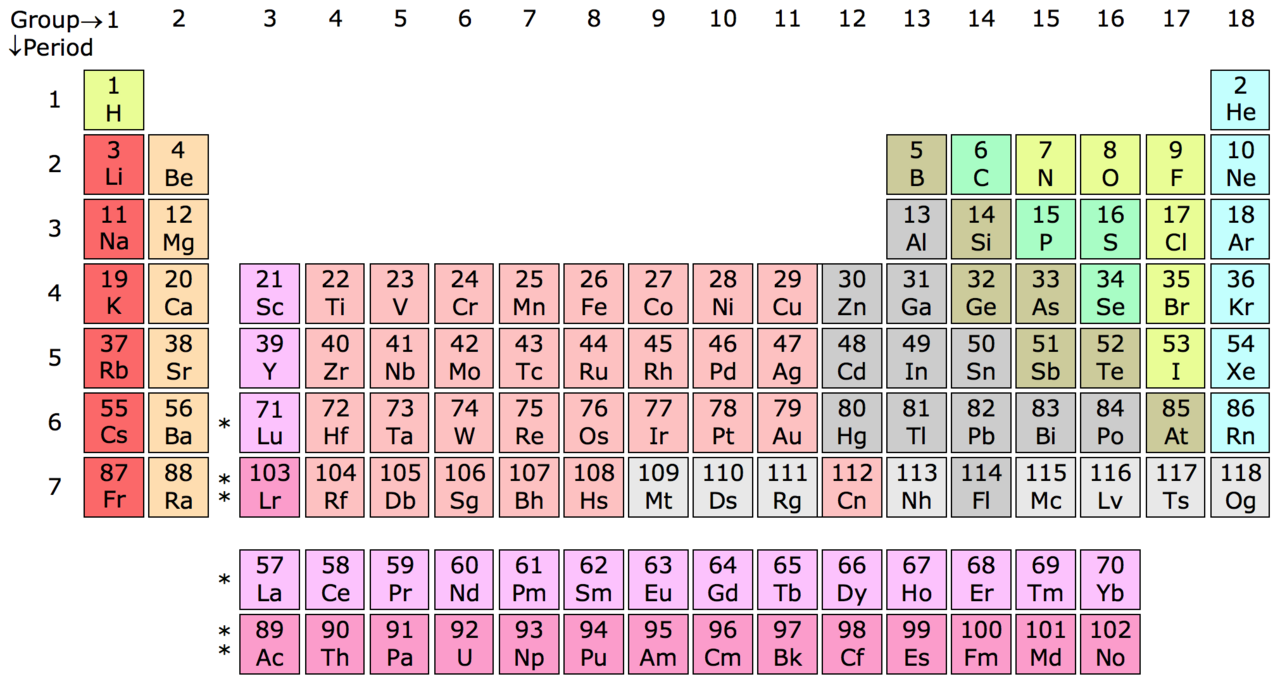
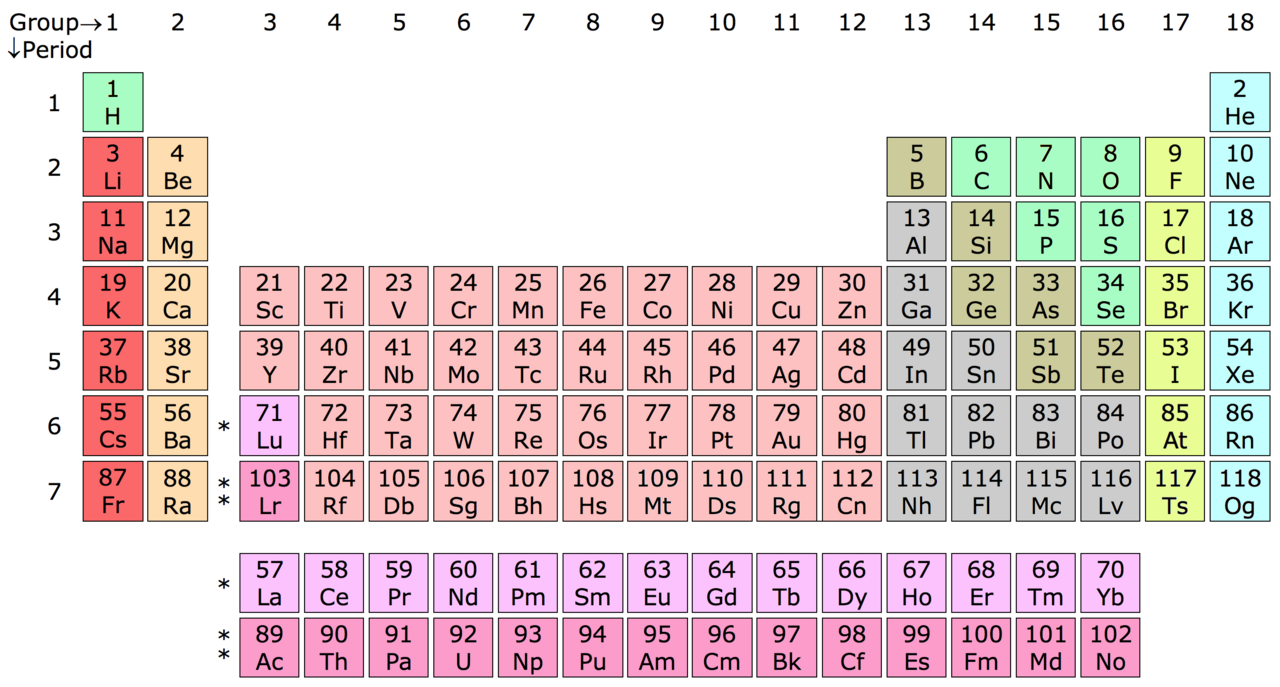
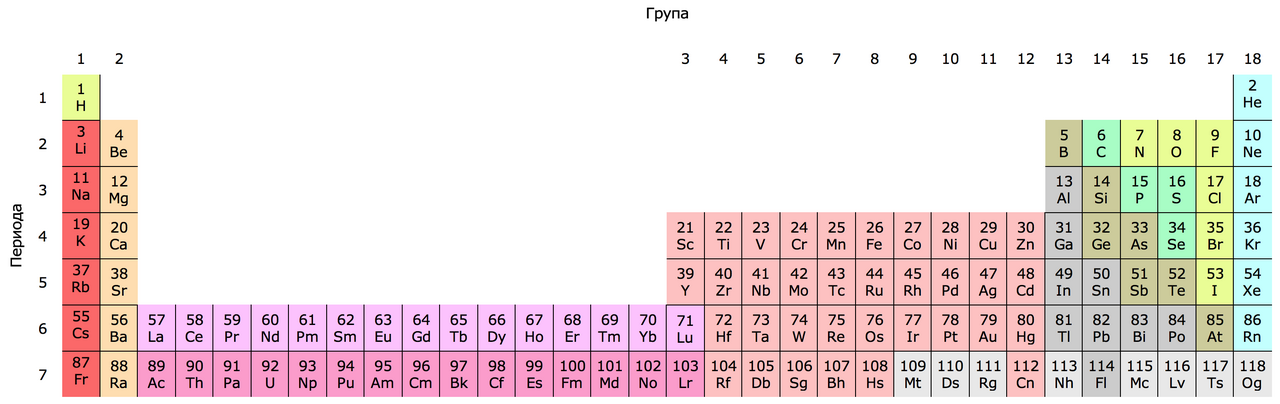
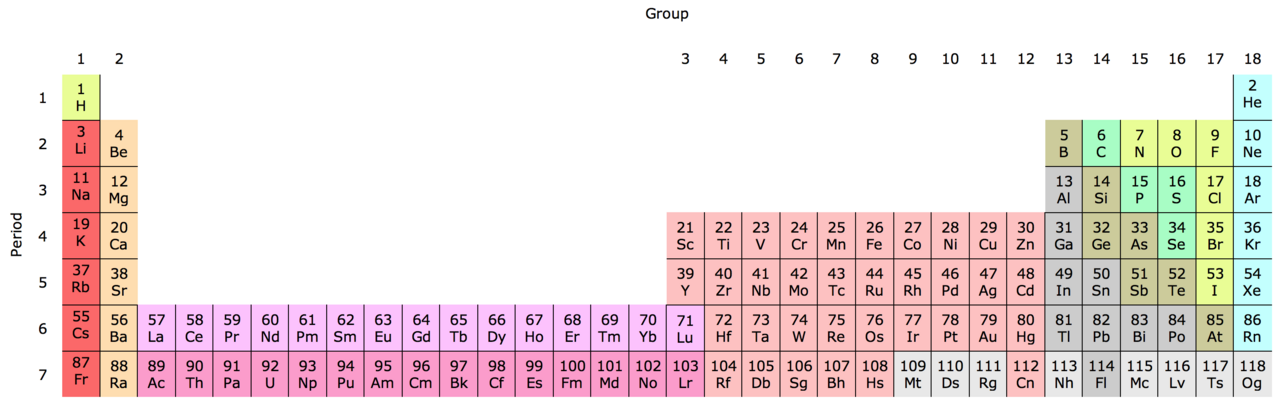
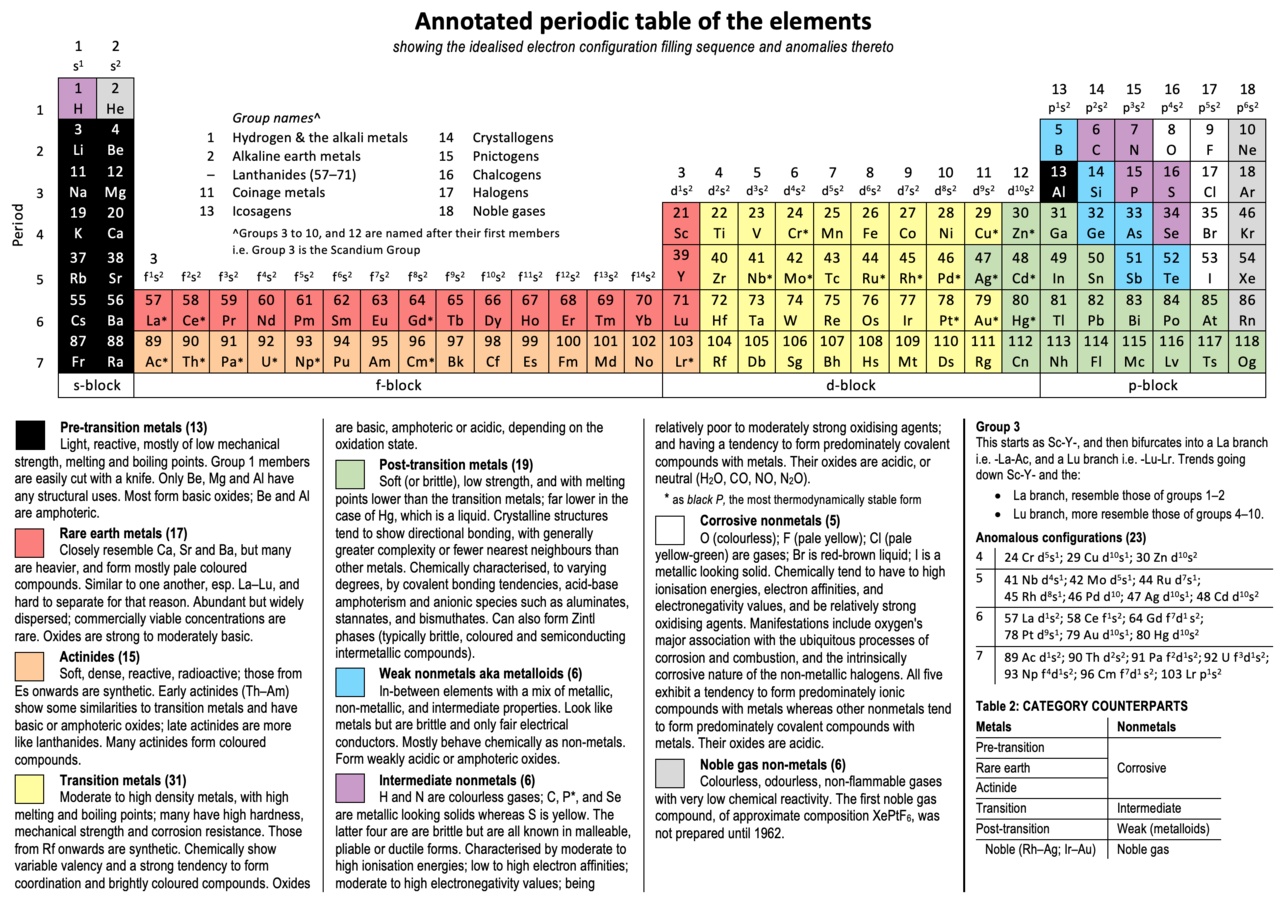
In chemistry, a group (also known as a family) is a column of elements in the periodic table of the chemical elements. There are 18 numbered groups in the periodic table; the 14 f-block columns, between groups 2 and 3, are not numbered. The elements in a group have similar physical or chemical characteristics of the outermost electron shells of their atoms (i.e., the same core charge), because most chemical properties are dominated by the orbital location of the outermost electron.
- Number of numbered groups
- 18
- Unnumbered columns
- 14 f-block columns
- Modern numbering system introduced
- 1988 by IUPAC
- Older systems
- CAS (Chemical Abstracts Service) and old IUPAC
- Common trivial names
- halogens, chalcogens, coinage metals, etc.
- Dissent about membership
- Elements 1 and 2 (hydrogen and helium)
Lore & Background
The modern numbering system of 'group 1' to 'group 18' has been recommended by the International Union of Pure and Applied Chemistry (IUPAC) since 1988. The 1-18 system is based on each atom's s, p and d electrons beyond those in atoms of the preceding noble gas. Two older incompatible naming schemes can assign the same number to different groups depending on the system being used. The older schemes were used by the Chemical Abstract Service (CAS, more popular in the United States), and by IUPAC before 1988 (more popular in Europe). Groups may also be identified using their topmost element, or have a specific name. For example, group 16 is also described as the 'oxygen group' and as the 'chalcogens'. An exception is the 'iron group', which usually refers to group 8, but in chemistry may also mean iron, cobalt, and nickel, or some other set of elements with similar chemical properties. In astrophysics and nuclear physics, it usually refers to iron, cobalt, nickel, chromium, and manganese.
Reader's Guide
The concept of groups is fundamental to the periodic table, organizing elements into columns that share similar chemical behavior due to identical outer electron shell configurations. The modern 1–18 numbering system, endorsed by IUPAC since 1988, replaced two older incompatible systems (CAS and old IUPAC) that used Roman numerals and letters A and B differently—causing confusion, especially between American and European usage. The system of eighteen groups is generally accepted by the chemistry community, but some dissent exists about membership of elements number 1 and 2 (hydrogen and helium). Similar variation on the inner transition metals continues to exist in textbooks, although the correct positioning has been known since 1948 and was twice endorsed by IUPAC in 1988 and 2021. Groups are also commonly referred to by trivial names such as halogens, chalcogens, or coinage metals, though some names (like 'iron group') can have multiple meanings depending on the scientific field. Understanding groups allows chemists to predict reactivity, bonding patterns, and oxidation states across the periodic table.
Did You Know?
- There are 18 numbered groups in the periodic table; the 14 f-block columns are not numbered.
- The modern 1–18 numbering system was recommended by IUPAC in 1988.
- Two older incompatible naming schemes (CAS and old IUPAC) used the same numbers for different groups.
- The 'iron group' can refer to group 8, or to iron, cobalt, and nickel, or to iron, cobalt, nickel, chromium, and manganese depending on the field.
The Chemical Logic Behind Group Membership
Elements are organized into vertical columns called groups because atoms within the same column share remarkably similar physical and chemical behavior. This similarity traces back to the outermost electron shells of their atoms, which carry the same core charge. Since most chemical properties are governed by where the outermost electron sits in its orbital, elements stacked in the same column naturally exhibit parallel reactivity patterns. The modern 18-group framework, endorsed by IUPAC since 1988, is built on counting s, p, and d electrons beyond those present in the preceding noble gas. Despite this clean logic, the chemistry community still debates where hydrogen and helium belong—whether they truly fit into group 1 and group 18 respectively. Similarly, the placement of the inner transition metals (the f-block) has generated variation across textbooks, even though the correct positioning was established as early as 1948 and was formally endorsed by IUPAC in both 1988 and again in 2021.
Resolving a Century of Numbering Confusion
Before the current standard, chemists in different regions relied on two incompatible naming schemes that could assign the same group number to entirely different columns. The Chemical Abstracts Service system, popular in the United States, and the older IUPAC system, favored in Europe, both used Arabic or Roman numerals combined with A and B suffixes. The numerals in both systems roughly indicated the highest oxidation state of elements in that group, progressing linearly across the table with some irregularities among transition metals. However, the letters meant opposite things: old IUPAC placed A on the left and B on the right, while CAS reserved A for main-group elements and B for transition elements. This meant the same label could point to different columns depending on which convention a reader followed.
Trivial Names and the Iron Group Puzzle
Beyond their numerical labels, many groups carry informal or trivial names that have persisted for decades. Group 16, for instance, is commonly called the oxygen group or the chalcogens. Group 13 elements are sometimes referred to as triels (from Greek tri, meaning three), group 14 as tetrels (from tetra, four), and group 15 as pentels (from penta, five). The coinage metals of group 11—copper, silver, and gold—carry a name tied to their historical use in currency, though roentgenium, also in group 11, is sometimes excluded because its extreme radioactivity and short half-life make it impractical for any such purpose. The most notable exception to straightforward naming is the iron group. In chemistry, this term usually points to group 8, but it can also refer to iron, cobalt, and nickel, or yet another set of elements sharing similar properties. In astrophysics and nuclear physics, the iron group expands to include chromium and manganese as well.
The F-Block and Non-Columnwise Groupings
Although a group is formally defined as a single vertical column in the periodic table, the table actually contains 32 columns in total. The 14 f-block columns, situated between groups 2 and 3, remain unnumbered in the modern system, a deliberate choice that keeps the 1-through-18 sequence intact. This structural quirk means the f-block elements, while chemically significant, do not receive their own group number. Beyond the standard columnar groups, chemists also use the word group for sets of elements that do not form a single column. Examples include noble metals, coinage metals, precious metals, and refractory metals—collections defined by shared properties rather than positional alignment. These non-columnwise groupings highlight that the periodic table's organizing principle, while powerful, is not the only way chemists categorize elements. The coexistence of strict column-based groups and these looser property-based sets reflects the discipline's ongoing effort to balance structural regularity with practical chemical behavior.
Gallery
Frequently Asked Questions
What is a group in the periodic table?
A group is a vertical column of elements that share similar chemical and physical traits because their outermost electron shells are arranged in the same way. Think of it as a family of elements that behave alike in reactions.
How many groups are on the periodic table?
There are 18 numbered groups in the modern layout. Additionally, 14 unnumbered f-block columns sit tucked between groups 2 and 3, housing the lanthanides and actinides.
Why do elements in the same group have similar properties?
It comes down to their valence electrons—elements in one column share the same number of outermost electrons, which dictates how they bond and react. Since chemical behavior is largely governed by those outer electrons, the whole column acts like a chemical sibling group.
What are some common names for element groups?
Fans and chemists often use trivial names like halogens for group 17, chalcogens for group 16, and coinage metals for group 11. These nicknames make it easier to reference a family without always saying 'group 17' or 'group 16.'
Why is hydrogen's and helium's group placement debated?
Hydrogen sits in group 1 but doesn't really act like the alkali metals below it, and helium sits in group 18 despite having two valence electrons rather than eight. This makes their family membership one of the most hotly discussed points in chemistry circles.
More in Periodic Table & Elements 1-21
Spotted an error? Know more?
This is a living reference — every entry is fact-audited, and reader corrections feed straight into our audit queue. Suggest an edit · See this site's audit record