Group 9 element
Rare transition metals including cobalt, rhodium, iridium, and meitnerium.

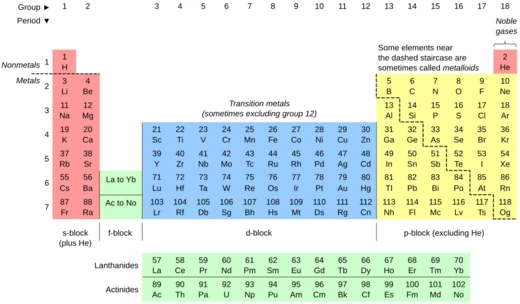
Group 9, by modern IUPAC numbering, is a group (column) of chemical elements in the d-block of the periodic table. Members include cobalt (Co), rhodium (Rh), iridium (Ir), and meitnerium (Mt).
- Group number
- 9 (modern IUPAC)
- Members
- Cobalt, Rhodium, Iridium, Meitnerium
- Older group names
- VIIIB (CAS U.S. system) or VIII (old IUPAC European system)
- Biological role
- Only cobalt has a biological role, as a key constituent of vitamin B12
Lore & Background
Cobalt compounds have been used for centuries to impart a rich blue color to glass, glazes, and ceramics, with evidence in Egyptian sculpture, Persian jewelry from the third millennium BC, Pompeii (destroyed 79 AD), and Chinese Tang and Ming dynasties. Swedish chemist Georg Brandt discovered cobalt c.
Reader's Guide
Group 9 elements are historically and industrially significant. Cobalt's use in blue glass and ceramics spans millennia, and its discovery by Georg Brandt marked the first new metal identified since antiquity. Today, cobalt is essential in lithium-ion batteries, high-strength alloys, and as a catalyst in petroleum refining. Rhodium and iridium, both discovered in the early 1800s, are extremely rare and corrosion-resistant, with rhodium used in jewelry and iridium as a hardening agent for platinum. Meitnerium, a synthetic radioactive element, has only been produced in minute quantities and is considered a homologue to iridium. Biologically, only cobalt plays a role, as a key component of vitamin B12, essential for ruminant animals and humans.
Did You Know?
- Iridium was named after Iris, the Greek winged goddess of the rainbow, because many of its salts are strongly colored.
- Meitnerium was first synthesized on August 29, 1982, by a German team at the Institute for Heavy Ion Research in Darmstadt.
Frequently Asked Questions
Who is Group 9 element?
Group 9 is a column of four transition metals in the d-block of the periodic table: cobalt, rhodium, iridium, and meitnerium. Under older naming conventions it was labeled VIIIB in the CAS system or simply VIII in the old European IUPAC system.
What are Group 9 element's powers or role?
Rhodium and iridium stand out as the only non-radioactive metals that cost more per gram than gold, making them extraordinarily valuable in catalysis and electronics. Cobalt, meanwhile, is the lone member with a direct biological role, serving as the central atom in vitamin B12.
How does Group 9 element's story end?
Meitnerium, the heaviest member, is entirely synthetic and has never been found in nature, existing only as trace atoms in laboratory settings. The other three members are naturally occurring, though rhodium and iridium are so scarce that they rank among the rarest stable metals on Earth.
Why is Group 9 element important?
Beyond their astronomical market prices, rhodium and iridium are critical catalysts in automotive exhaust systems and large-scale chemical manufacturing. Cobalt's presence in vitamin B12 makes it essential for healthy blood-cell production in humans and animals, giving the group a unique biological footprint.
What's Group 9 element's backstory?
The group's numbering shifted when IUPAC adopted the clean 1-to-18 column system, rebranding what had been called group VIII (European) or VIIIB (CAS) into the straightforward 'Group 9.' Meitnerium, element 109, was added later in honor of physicist Lise Meitner, completing the column's four-member lineup.
More in Periodic Table & Elements 1-21
Spotted an error? Know more?
This is a living reference — every entry is fact-audited, and reader corrections feed straight into our audit queue. Suggest an edit · See this site's audit record