Livermorium
Synthetic superheavy element, named after Lawrence Livermore National Laboratory.

- symbol
- Lv
- discoverers
- Lawrence Livermore National Laboratory and Joint Institute for Nuclear Research
- element_category
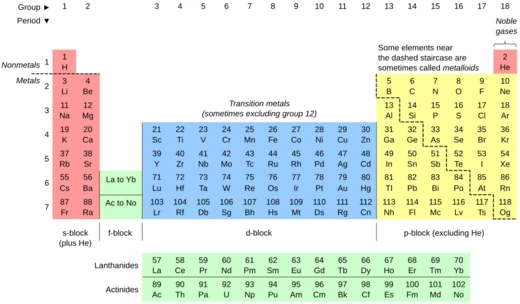
- p-block transactinide, heaviest chalcogen
Lore & Background
The initial assignment of the isotope was later revised from 292Lv to 293Lv after further analysis in December 2002. The name derives from the Lawrence Livermore National Laboratory, which in turn is named after the city of Livermore, California, and ultimately rancher Robert Livermore.
Reader's Guide
Livermorium is significant as one of the heaviest elements on the periodic table, representing the frontier of superheavy element research. Its synthesis required decades of experimental refinement, including the development of intense calcium-48 beams and advanced separators at the Joint Institute for Nuclear Research. As the heaviest chalcogen in group 16, livermorium is calculated to have some similar properties to its lighter homologues (oxygen, sulfur, selenium, tellurium, and polonium) but also major differences. Its naming after the Lawrence Livermore National Laboratory reflects the international collaboration between the United States and Russia that led to its discovery.
Did You Know?
- The element is named after the Lawrence Livermore National Laboratory, which in turn was named after the city of Livermore, California, and rancher Robert Livermore.
Frequently Asked Questions
What is Livermorium's role in the periodic table?
As a p-block transactinide, Livermorium occupies the far-right corner of the superheavy-element region and holds the title of heaviest chalcogen. Its extreme radioactivity means it exists only as fleeting atomic traces rather than any stable bulk material.
Why does Livermorium matter to element fans?
It marks the current frontier of human-made matter, pushing the periodic table to its synthetic limits as a period-7 element. Its existence demonstrates that nuclear physics can still forge entirely new elements, even though each one decays within moments of creation.
More in Periodic Table & Elements 1-21
Spotted an error? Know more?
This is a living reference — every entry is fact-audited, and reader corrections feed straight into our audit queue. Suggest an edit · See this site's audit record